
Care for Your Apitong Trailer Floor
Flatbed trailers live outside. The right finish, applied once a year, is the difference between a floor that goes 5 years and one that goes 15-20 years.
This guide covers everything we know about preserving Apitong, Angelim Pedra, and other tropical hardwood trailer floors — from why moisture and UV cause damage, to which finish to choose, to exactly how often to reapply.

Weather & Exposure of Trailer Flooring
Flatbed trailers are typically exposed to the elements 24/7/365. This exposure is where flooring suffers the most weather-related damage. To preserve the natural strength and appearance of Apitong, we recommend a regular review of all wooden surfaces on your trailer at least twice a year — once in spring before heavy use, once in fall before storage.
Pay special attention to horizontal surfaces. They're much more exposed to weather influences than vertical ones. The most important external elements that affect both the strength and appearance of the wood are:
- Sun — UV breaks down the lignin that binds wood fibers together
- Rain & snow — moisture cycles drive shrinkage and swelling
- Wind — accelerates moisture loss, drives debris into surface checks
- Polluted air — industrial atmospheres accelerate weathering
Moisture Changes Create Shrinkage & Swelling
Wood is a hygroscopic material — it naturally takes on and gives off water to balance with its surrounding environment. Wood shrinks and swells when it loses or gains moisture below its fiber-saturation point (around 28% MC for most species). This is responsible for nearly every problem we encounter when wood dries.
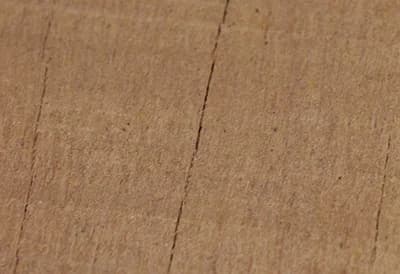
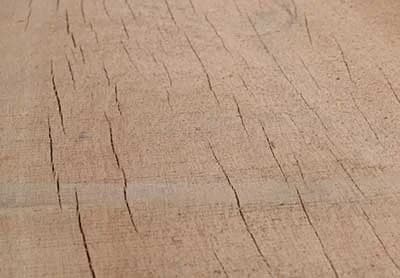
For example, cracks and checks result from stresses induced when a piece of wood is drying. As the piece dries, it develops a moisture gradient across its section — drier on the outside, wetter on the inside. The dry outer shell wants to shrink as it drops below fiber saturation, but the wet core constrains it. The result: small surface cracks called "surface checking" or "season checking" — the most visible sign of weather damage on an unfinished floor.
Besides moisture-driven checking, high temperatures also damage your floor. The face of the decking shrinks as moisture evaporates rapidly; you get larger-than-normal spacing between boards, sometimes accompanied by concave cupping. A black trailer in Phoenix in August can hit 160°F on the deck surface — that's a worst-case scenario for an unfinished hardwood floor.
Apitong Oil — The Finest Protection Available
APITONG OIL by ExoShield is the first wood finish we designed without any compromise. Pure Tung oil base, transoxide pigments, fungicide, UV blocker — made in Portland, Oregon. Apply once a year, walk on it the next morning, and your floor stays flat and tight for years. We tested it against every linseed-oil and vegetable-oil alternative on the market; nothing performed close.
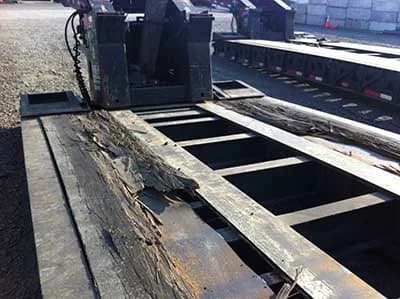
Bakersfield, CA — Before, During, and After
Same flatbed, three months apart. The "before" frame is what UV and untreated weather will do to a hardwood deck after a few seasons. The "during" frame shows the deck after a low-pressure rinse and a 24-hour dry. The "after" frame is one coat of Apitong Oil — color refreshed, surface tight, ready for another year of work.
One hour of labor, a gallon of oil. That's the difference.

Apitong Oil — The Finest Wood Finish on the Market
Pure Tung oil. Trans-oxide pigments. Fungicide. UV blocker. Made in Portland, Oregon. One coat per year keeps Apitong, Angelim Pedra, oak, and softwood floors looking and performing like the day they went on.
Sunlight and UV Damage to Wood Flooring
Another major source of damage to flatbed trailer decking is sunlight. UV rays break down the materials that hold wood fibers together — the same way they destroy outdoor cushions and patio furniture over a couple of seasons.
On an unfinished Apitong floor, the surface graying you see is UV damage. The surface fibers themselves haven't lost much strength yet, but the lignin that binds them is breaking down. Over time, those weakened fibers wash away with rain, exposing fresh wood underneath, which weathers the same way. Without intervention, this cycle removes about 1/16" to 1/8" of surface wood per year.
The simplest, cheapest hedge is a finish with UV blockers. The transoxide pigments in Apitong Oil are the same UV-blocking compounds used in high-end exterior siding finishes — they reflect the most damaging wavelengths before they reach the wood.

Wood Adjusts to Its Surrounding Environment
Even properly seasoned decking can change dimensions after installation if conditions are right. Extreme swings between summer and winter, or between desert and coastal climates, can adversely affect your trailer decking. The simplest, cheapest hedge is — again — a good finish.
The cost of labor to apply a quality finish is minimal compared to the damage and degradation that come from the elements. It usually takes less than an hour and 1-2 gallons to properly protect a 48' flatbed. Compare that to a full redeck job at $1,500-3,000 and the math is obvious.
Five Years of Annual Treatment
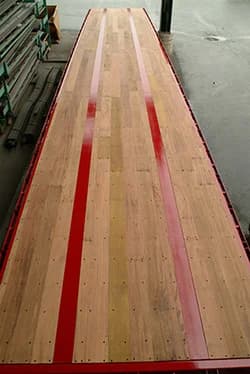
Same Apitong floor, five years later. Annual oiling, low-pressure rinses, a few touch-ups around the high-wear zones. Flat. Tight. No checks. The original cost of the wood and the time to install it are amortized across a decade and a half — not the half-decade that softwood gives you.
Oil Stains (Recommended)
Choose an oil-based stain over a clear water-repellent preservative. Of the oil stains, choose Tung-oil based over linseed-oil or vegetable-oil based. Tung oil dries flexible and won't go rancid inside the wood fibers. Linseed and vegetable oils slowly oxidize from the inside out, eventually souring the wood.
Any oil-based stain you choose should contain UV blockers and fungicide — both are critical for the long-term life of an exposed trailer floor. Our Apitong Oil has both, plus the transoxide pigments that handle the heavy-UV color band.
Water Repellents
Clear water-repellent preservatives are usually wax- or silicon-based. They seal the surface but don't soak deeply into the wood. They're cheaper (about half the cost of a good oil stain) but should be reapplied every 6–12 months instead of annually.
The bigger issue: water repellents don't dry or harden enough to provide lasting protection. They keep liquid water out for a few months but offer little UV protection and no resistance to abrasion. Acceptable as a stopgap; not what we recommend for a working trailer.
Pro Tip: Seal the Ends Before You Install
End-grain absorbs moisture 10× faster than the face of the board. Most checks and splits start at the ends, then propagate inward. Sealing every cut end with ExoWax before installation is the single most effective thing you can do to prevent premature failure. It takes about 15 minutes per trailer and adds years of life.
Check the Label
Whatever finish you choose, make sure it contains all three:
- Water repellents — keeps surface water from penetrating
- Mildewcide / fungicide — prevents black-spot fungal staining
- UV blockers — prevents lignin breakdown and surface graying
If a product is missing any of those three, it's not the right finish for an exterior trailer floor.
Annual Care Routine in 60 Minutes
- Sweep and rinse the deck with low-pressure water (no power washer — it can drive water deep into checks).
- Inspect for loose screws, rotted areas, and any boards that have shifted. Replace as needed.
- Allow the deck to dry for 24–48 hours, ideally in shade.
- Apply Apitong Oil with a roller or large brush. One thin coat is better than one heavy coat. Coverage is roughly 200 sq ft per gallon on Apitong.
- Wipe excess with rags after 30 minutes if any pooled.
- Allow 12–24 hours before driving on the floor.
That's the whole routine. Once a year, every spring before heavy season, you've added 1–2 years to your floor's life.
Trailer Floor Care FAQ
The questions we get most often from fleet managers, owner-operators, and folks doing their first DIY redeck.
How often should I apply Apitong Oil?
Once a year for working trailers — apply in spring before heavy use. For trailers stored mostly indoors, every 18-24 months is fine. For trailers in extreme climates (desert sun, coastal salt air), consider twice a year. The first application after a redeck soaks deepest; subsequent coats build on top.
Do I need to remove old Apitong Oil before re-applying?
No. Apitong Oil is a penetrating finish, not a film-forming finish. New coats absorb into the wood and refresh what's already there. If the floor is genuinely dirty, sweep and rinse first; if it's heavily contaminated with grease or chemicals, a deck-cleaner pre-wash will help — but you don't need to strip the wood.
Can I use Apitong Oil on softwood or plywood?
Yes — Apitong Oil works on softwoods like Southern Yellow Pine and Douglas Fir, and on plywood. It won't turn a softwood floor into a hardwood floor, but it will roughly double its life by blocking UV and water infiltration. For plywood, focus on the edges where moisture penetrates first.
What's the difference between Apitong Oil and ExoShield?
They're from the same product family. ExoShield Apitong Oil is the trailer-flooring-tuned version — heavier pigment loading, slightly different drying additives, color-matched to weathered Apitong. The clear ExoShield products are tuned for residential decking, siding, and outdoor furniture. For a trailer floor, use Apitong Oil.
Is power washing safe for an Apitong trailer floor?
We recommend against high-pressure washing. The water pressure can drive moisture deep into existing surface checks, force the boards apart, and lift the surface fibers — all of which shorten the floor's life. Low-pressure rinse with a garden hose is fine. If you must use a pressure washer, keep it under 1,500 PSI and 18" away from the deck.
What does a typical maintenance bill look like over 15 years?
For a 48' flatbed: 2 gallons of Apitong Oil per year × 15 years × ~$80/gallon = roughly $2,400 in materials, plus an hour of labor per application. Compare that to two redeck jobs over the same period at $4,000-6,000 each. Annual oiling pays for itself many times over — and the floor looks better the whole time.

Make Your Floor Last 15+ Years
One coat of Apitong Oil per year. That's the difference between a floor that goes 5 years and one that goes 15-20. Same is true for ExoWax on the end cuts.