
Environmental Policy & Sustainable Forestry
We are committed to promoting sustainable forest management practices and reducing our environmental impact. We believe tropical-rainforest logging is generally misunderstood — and we want to help educate consumers and dispel common misconceptions.
Sustainable Forestry
Our commitment to sustainability begins with careful selection of wood suppliers who adhere to responsible forest management practices. All of our tropical hardwood products are sourced under Lacey Act standards, which require Nova to document the legal origin of every piece of timber.
SVLK & Selective Harvesting
South America and Southeast Asia are home to the world's most biodiverse forests. In Indonesia and Malaysia, we exclusively work with suppliers who hold SVLK (Timber Legality Verification System) certification — an independent system that verifies legal harvesting and processing.
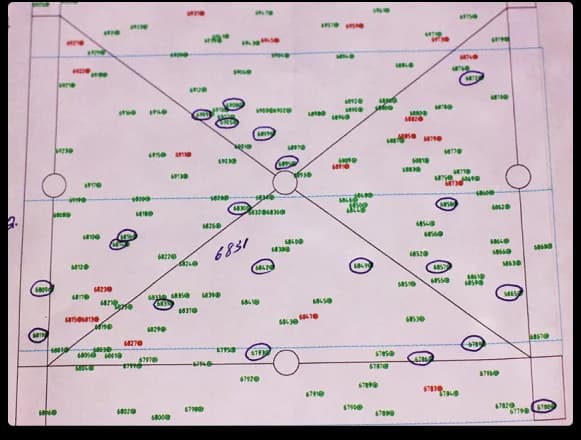
We support selective harvesting in these regions: forest areas are carefully mapped and divided, and only 20-200 trees are harvested per 1,000 acres. This maintains forest health and integrity, and allows natural regeneration to occur. We do not support clear-cutting in these regions — it has devastating consequences for both the environment and local communities.
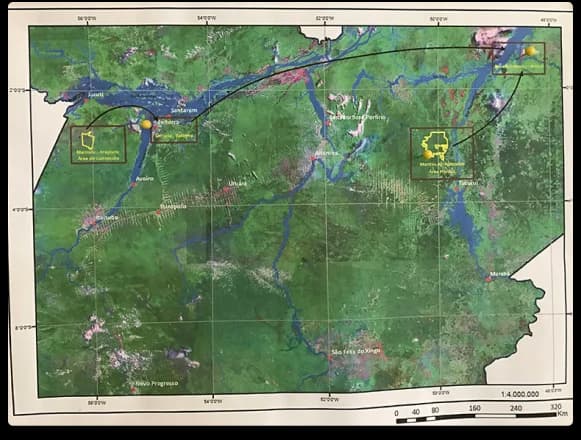
Mapped, Documented, Traceable
Every concession we source from is mapped and tracked under SVLK or equivalent national systems. This isn't aspirational — it's required. Lacey Act documentation accompanies every shipment we import, naming the species, the concession, and the legal harvest authority.
If a customer asks for chain-of-custody on a specific load, we can produce it.
Forest Management Plan
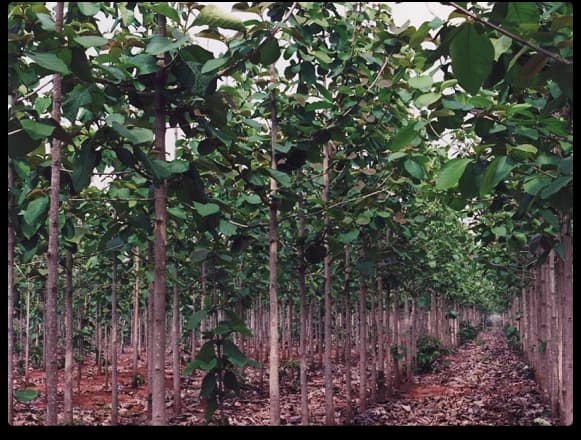
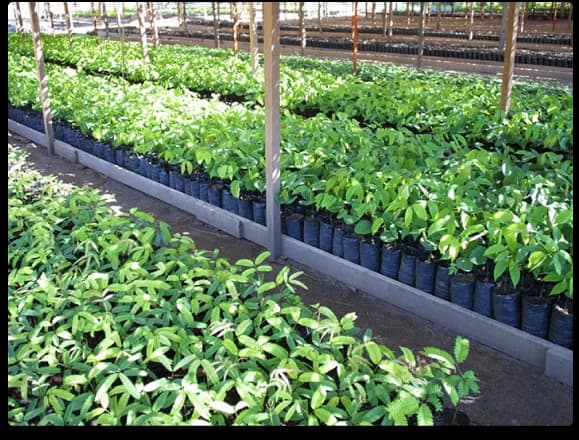
By working with responsible suppliers and supporting sustainable logging practices, we aim to promote the preservation of the world's forests for future generations. Selective logging in tropical forests is the best way to add long-term value to the standing forest resource — while also providing income and jobs for the people who live in the region.
We support government agencies and third-party certification organizations like the FSC (Forest Stewardship Council) in their efforts to promote sustainable and responsible logging practices in tropical rainforests.
Wood Products Are Environmentally Friendly
Wood products have a smaller carbon footprint than cement, plastic, or metal — all of which require huge amounts of fossil fuel to manufacture. Better still, wood stores carbon for the lifetime of the product. By choosing long-lasting natural wood products, we actually reduce the carbon footprint of every floor we replace.
A Ton of Apitong Removes 1,497 kg of CO₂
Every ton of plastic emits 5,442 kg of CO₂. Every ton of steel emits 1,677 kg. Cement: 840 kg. Apitong is the only common building material that's net negative — a ton of Apitong actually removes 1,497 kg of CO₂ from the atmosphere and stores it for the life of the floor.
Replacing a softwood deck with hardwood once instead of three times also avoids the embodied carbon of two redeck jobs.
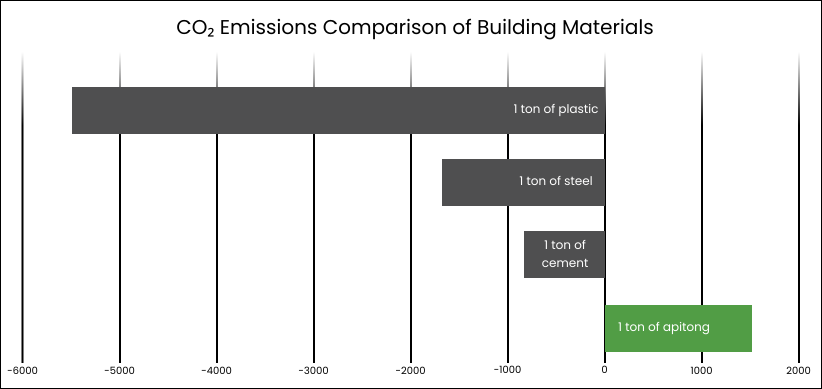
Carbon Footprint by Material
- 1 ton of plastic = 5,442 kg of CO₂ emitted on average (depends on type)
- 1 ton of steel = 1,677 kg of CO₂ emitted
- 1 ton of cement = 840 kg of CO₂ emitted
- 1 ton of apitong = 1,497 kg of CO₂ removed from the environment
Source: Leys, Andrea J. "How is Carbon Stored in Trees and Wood Products?" Forest and Wood Products Australia.
Deforestation vs. Selective Logging
Deforestation is a critical environmental issue, and the largest contributors are clear-cutting for agriculture, livestock, and housing. Selective logging in tropical forests is the opposite — it adds value to the standing forest resource while providing jobs and income for local communities.
Our commitment to sustainability as a premium wood importer means we prioritize responsible forest management practices, promote wood as a sustainable building material, and support efforts to protect tropical rainforests.
Build With Wood You Can Trace
Every shipment we sell is documented under the Lacey Act and sourced from selectively-harvested forests. Talk to us about specific certifications for your project.